This blog is an updated equivalent to a journal where records, pictures and comments on my assignments are to be shared with my peers, professor, and the world.
I love the idea behind this art instillation. Having the installation present without a projection alone astonishing, however, once the projector overlays video, it becomes an entirely new piece. This is by far one of the most creative uses of projection I have seen. What is great is that the images and installation are 2D yet when the projections play through, the installations have great depth and the illusion of 3 dimensions. Haunted houses and amusement parks should feature most visuals like this as it draws onlookers attention away from reality. Each little set made for this installation features its own background story that can be viewed and interpreted in various ways. I believe that for an art piece this is most important. The audiences perception of the piece should always be a consideration that the artist makes. It is great that the traditional art is given new life with the projector. Overall, I am really impressed with this installation and how it seems like a contemporary take on Wayang Kulit.
The video attached above features one of the most lifelike body projection I have ever seen. The lighting is so masterfully altered so that the video projection is extremely vivid and transforming. Face tracking technology has made this ever more so possible than just a stationary face. I rather enjoyed the many faces the model had projected onto her. My favorite projection throughout this video was the robot face that opened up as if the model was an android. There should be a vegas performance based solely on body projections. It is so inviting and enthralling for audiences of all ages. There are endless possibilities with a performance such as this. Overall, I am getting increasingly impressed with the technology and art that transcends the human mind.
Youtube Video of Leafs vs. Hurricanes
(Courtesy: Toronto Maple Leafs)
This video of the ice rink video projection was amazing. I have only seen brief projections and images displayed on the ice before, but nothing this detailed and engaging. I even enjoyed the use of the song Tsunami by DVBBS. This is surely a good choice for a hockey game as it gets people hyped up before the teams face off. The introductory images were truly cinematic and overwhelming. I rather enjoyed seeing the rink lit up like that, and would like to play hockey with just the projections on the ice. It would make for a great challenge and one of a kind experience. The blend between sports, art and technology have really evolved over the past decade. I can only imagine what the future will bring to societies favorite pass times. It is interesting to think that sporting events are now more than ever reliant on marketing and promoting of certain brands as well as products.
Yoko Ono's 1965 cut piece was a great example of performance art. She subjected herself to the will of the public. It was a bold choice to let the audience interact with her as a live art installation. Much more credit is given to her for letting the audience cut off her clothes. I don't fully understand the message or original intent behind this performance art, however, I know it provides deep meaning into the life and beliefs of Yoko Ono. Being as prominent of a social figure as she is, this performance art is one to be admired for bravery and impact. The music that accompanies the video is certainly strange enough to make listeners reevaluate what they are watching solely based on the eclectic sounds made throughout the track. It is worth noting that throughout the entire video she maintains a calm and soothing look, rarely phased by the audiences interactions. Overall, I enjoyed Yoko Ono's cut piece, although it is not an approach at performance art I would take myself.
This performance piece hosted by Oprah was interesting to watch. At the time, in 2009, I'm sure this flash mob came close to if not set a record. To orchestrate and coordinate this many people together is outstanding. I personally have never been part of a flash mob before but am sure it is quite difficult to rehearse with so many people. I would imagine that it takes weeks of practice to perfect the choreography and timing. Since this event I am sure there have been larger scale flash mobs that need helicopter coverage just to capture the vast amount of people moving in unison. In order to pull off such a large scale flash mob, each person must be familiar with the live performance by the Black Eyed Peas. This is a feat that not many people can pull off. Oprah is truly a great host who has just about done it all with the goal of pleasing her audience. This performance art is nothing short of Oprah's on camera magic that seems to bring out the best in everyone. Her success can be attributed to her commitment to all.
The performance piece in which Banksy modifies and recreates Paris Hilton's new CD is amazing. I was unaware he even did this, despite knowing about his work for years now. I must applaud Banksy as I share a strong dislike for Paris Hilton along with the rest of the world for having little to no talent. I enjoyed the idea and concept behind this event, however, the quality could have been better. I believe the way in which the CD's were switched out could have been easier. Assuming that this video was taken years ago, I will not critique this video as harshly as I would a modern day reproduction. This was most certainly shot during the age where hard copy disks were as heavily guarded and monitored than jewelry. Nowadays CD's have been rendered obsolete with the popularity of streaming and now store owners would be lucky if thieves stole their hardcopy disks just to free up the space they are taking up. Overall, I enjoyed the performance and hope to see Banksy recreate this old video with a newer more relevant artist.
The link above directs to Vice.com where readers can learn more about the forgotten floppy disk art by Andy Warhol.
The art piece you see above is one of Andy Warhol's digital drawings that was recovered in 2014 by the Carnegie Mellon Computer Club. What is great about this story is that the digital drawings were formatted with a obsolete file format on a set of floppy disks. In order to recover the drawings, the team of computer specialists had to use a Kyroflux device which allowed them to run obsolete file formats and then run an emulator of Amiga, the program Warhol used to make the drawings. This was quite the discovery as 28 unseen Warhol images were recovered. This is in some respect digital archeology. It is truly amazing what technology has the capability of considering its ability to interact with outdated hardware and software. It is also amazing that a file that was written more than 20 years ago has maintained its integrity and is able to be viewed with today's technology. Thanks to the Carnegie Mellon Computer Club, the world has more Warhol art pieces to admire and appreciate. This is truly a great time for art and technology.
The link above directs to wired.com where readers can learn about Apple's introduction of the Mac. In 1984, Apple had taken a brazen approach at marketing their newest product the Macintosh computer. With IBM was competing heavily against Apple at the time, the marketing team along with Steve Wozniak had launched a TV commercial that would air during the Super Bowl. Thanks to this decision, this commercial has earned the title "Commercial of the Decade". According to the article, the commercial impacted thousands of people despite only being aired once. Now considered one of the highest performing computers made, the Mac product line offers users the ability to conduct their business with ease and simplicity. For those who have used or own a Mac, can testify to its ease of use paired with fast processing. With Windows computers still being the majority of computers around the world, Macintosh has established itself as expensive, high performance computer that meets all users' needs. By looking back at the origin of the Mac, one can easily identify how far the product line has come and the evolutionary stages it has gone through since its release in 1984. Surely it has done a significant job with marketing as it has won the battle over the IBM's computer line.
The link above directs you to pbs.org where readers can learn about the history of the telephone. After reading this article, I was astonished at how involved Alexander Graham Bell was after inventing the telephone and creating a new industry. I found it interesting that doctors and pharmacists became the early adopters of this new product while it was no surprise to learn that the wealthy were among the first to acquire the telephone as well. History has shown that the wealthy have always tried to stay concurrent with all the newest trends. Even more so today as social status is greatly dictated by the number of assets one has in their possession and how expensive it is. The telephone is one of mankind's greatest inventions. It revolutionized the way people communicate across long distances and increased the chances of a recipient receiving a message. Without Alexander Graham Bell's invention, widely successful companies such as AT&T and Verizon may never have existed. I would imagine that a world without cellphones would be less exciting and much more inconvenient. From the perspective of social interaction, people would not be able to communicate as easy throughout the day, talking less frequently than with a phone. From the perspective of commerce, people would lose the option of paying with their phone, restricting the maximum profits made by businesses. Overall, the world should recognize Bell's contribution to society and appreciate his great invention.
After watching the video shown above, it is fascinating to see how Broadway has evolved from vaudeville, burlesque, and cabaret. I was particularly impressed with the woman who could pick up a chair with her teeth and swing it around effortlessly. This is impressive by today's standards, as many people would usually break their teeth or be sent to the dentist expecting a hefty bill. It certainly holds weight against some acts seen on the television show America's Got Talent. This burlesque dancer could have made quite a living if she were born in the 21st century. Surprisingly, I enjoyed the footage and the various acts despite being from 1898 to 1910. The acrobat in particular is worth noting. She was able to fully exercise her talent and skill without any limitations or safety nets, making her performance exquisite and enthralling. Nowadays almost every professional performance artist has a manager who advises against many of the death-defying acts for the purposes of safety. In many cases, some acts do not get clearance and force the performer to limit their routine. This puts a damper on many performers who do not get a chance to fully express themselves. This as opposed to freelance exhibitionists, who seem to hold a reputation for doing whatever they feel inspired by and can pull off to draw a crowd, make headlines, or leave a lasting message. Broadway is now reserved for large feature productions yet has deeply ingrained roots within vaudeville, burlesque, and cabaret. It is difficult to recognize a Broadway show for its brilliance without paying homage to the three performance styles that it has stemmed from. Today's Broadway shows are so elaborate and feature performance art, digital imaging, and an ensemble. Talent is just as good as it was as the art form developed over the years.
Wayang Kulit, the Indonesian theatrical performance of shadow puppets, is deeply ingrained in the country's culture, history, and livelihood. It is so important that there are three specific regions where it has become infamous for this art form. Careers, theaters, and pass times have been created as a result of this cultural performance. Wayang Kulit can be used to describe the current social structure of Indonesia, give out sermons, and a medium of education as mentioned in the video. It can also be used as a medium for dispersing information to the people. It is seen as an ingenious cultural heritage of Indonesia and the world to many Indonesians, often synonymous with the identity of the country.
In the video a man who now works as a Dalang, a shadow puppeteer, was taught since the age of three to master Wayang Kulit. As a Dalang he is expected to orchestrate the puppet movements in synchronization with the music and dialogue, as well as play instruments at the same time. According to the video, a single performance can use up to 400 different Wayangs, each with their own characteristics and distinct features that contribute to the storyline.
Much like Wayang Kulit, American theater has shared its history with storytelling and performances. Puppet shows, marionettes, and films have been used to achieve many similar goals that the Indonesians seek with Wayang Kulit. Despite the low technological integration that the Indonesian theatrical performance has, it still requires a great amount of skill and has remained true to its origins. American theater unless specified as solely one type of show has evolved to a more contemporary style. This change has developed in order to satisfy the ever-changing interests of the American public. Adaptations from classic performances have now become common and most of the old styles are performed for a sense of nostalgia or urge for avant-garde trends.
The link above directs you to PBS.org where readers can learn about the history of the microchip. The microchip, an invention that has spurred so many others that it can be considered a building block for most future technologies. Most commonly, it serves to be used as a personal computing device. Due to Moore's law, microchip technology is advancing, reaching greater computing power at cheaper costs. Due to this defined law, the average smartphone in 2016 has more computing power than Apollo 11 in 1969 when it ventured to the moon, says Time magazine. As described in a 2012 NASA post, "smartphones have more than 100 times the computing power of the average satellite, with fast processors, high resolution cameras, GPS receivers and several radios and sensors built in". With such vast capabilities and advanced technology, the power to create increases exponentially. The reality, however, is that the average smartphone owner will not use their phone to develop anything useful, but remain a consumer only to download applications or send text messages. For those who have contributed to the advancement of society with life improving products or services, the world thanks you and hopes to see more inspiring people like yourself. Stengel, Richard. "Making Sense of Our Wireless World." Time. Time Inc., 27 Aug. 2012. Web. 16 Apr. 2016. Yost, Bruce. "This Week @ NASA, November 23, 2012." NASA. National Aeronautics and Space Administration, 23 Nov. 2012. Web. 16 Apr. 2016.
The link above directs you to About.com where readers can learn about the history of the battery By reading this article, it becomes clear that the battery was far from a modern day invention. In fact its concept dates back to the 18th century, when Benjamin Franklin coined the term battery. According to the article, he described it as "an array of charged glass plates" . The concept of containing electricity in a confined space for future use may seem like a mediocre explanation of an electrical cell, however, at the birth of this concept was a groundbreaking technology. By the mid 19th century improvements had been made and further revolutionized in 1859 when Gaston Plante, a French inventor made the first rechargeable battery. It was only in 1901 when Alkaline batteries were invented and 1954 when solar cells reached the market. All of which are taken for granted now that almost every small appliance or device requires some form of battery. With a majority of the world carrying around their own personal rechargeable battery cell in their pockets on the daily basis, it is difficult to forget about its humble beginning. Yet somehow society still manages to overlook this detail integrated into their cell-phone(s). Perhaps it is all the distractions and applications that can be installed on today's smartphones. Consideration towards the battery only occurs when the owner has expended their battery life low enough to where they receive notification. It is during this event that the owner experiences a sense of panic and then urgency to recharge the cell takes precedence in order to remain connected to the digital world. The point of all this being that despite being disposable as well as negligible in many modern day instances, the battery has had a long journey since its introduction to the world, one that if suddenly nonexistent would change the lives of many.
Front View of Spiny Shell (Courtesy: Matthew Chang)
Side Profile of Spiny Shell (Courtesy: Matthew Chang)
Of all the projects assigned throughout the semester, the 3D printing project was the most rewarding. With the guideline specified as a cute weapon, my inspiration came from the spiny shell from the Mario video game series. The spiny shell is represented in the first photo while, the second and third are the 3D printed version. It is not the most detailed replica, but considering it was my first time using a 3D printer, it came out well. I was particularly satisfied with the final project, and surprised at how sharp the spikes turned out to be. The program I used to create the model was Tinkercad. It was very user friendly, with many features, community made objects, as well as detailed tutorials. Overall, it took 20 hours to design and finish this project then was sent to the staff at The Hive in downtown Tampa for printing. 3D printing has become much more popular in the last few years as the cost of acquiring a printer has become more affordable. With popularity comes more creative projects like this, new ideas, as well as solutions to specific problems. Having the knowledge to use 3D printing interface and the ability to print items will surely be vital in the near future. If given another opportunity or have free time to create more 3D objects I would gladly take that opportunity.
Walter Benjamin, author, philosopher and cultural critic shown above (Courtesy: http://image.slidesharecdn.com)
Walter Benjamin's essay, The work of Art in the Age of Mechanical Reproduction brings attention to technological innovation and its impact on art. He uses art forms such as photographic negatives, lithography, and copperplate etching to describe how imitation has become more prevalent over the years. Stemming from mass production, curiosity, greed and self-interest, replication have always existed.
Benjamin argues that in principle, all works of art are able to be replicated. With many objects, structures, paintings or drawings, this is perhaps true, however, there are exceptions to this principle. Many pictures are considered works of art, featuring a specific time or event that transpired. In the example of a volcanic eruption, an event that occurs very rarely, it would be difficult for someone to reproduce a picture that someone took on a specific day, time, angle, lighting, etc. Even if the imitator managed to meet all the same criteria, there is such a minute statistical chance that someone would be able to get an identical picture. In the sense that someone could digitally scan the picture or use a negative and "replicate" it, is a possibility but is still a challenge to physically recreate. There are many forms of art, some easier to imitate than others and some not. In my opinion, performance art is not replicable. It can be imitated but not 100% replicated. Stage performers can practice and rehearse their routine as frequently as possible yet will not be able to perform the same time with consistency. Each interaction with other performers, the physical condition of the performer at the time, mood, and attention to detail are all contributing factors that make replication almost impossible. Overall, my take on the matter leaves me to believe that Walter Benjamin is wrong in stating all works of are replicable. There are certain forms of art that are unique in that they are not replicable by the nature of their appearance, circumstances, or properties. Benjamin, Walter. "The Work of Art in the Age of Mechanical Reproduction." Modern Art and Modernism. Auckland, N.Z.: PhotoForum, 2007. 218-20. Print.
Above is a depiction of what a Minstrel show performer would generally look like
(Courtesy: sideshowworld.com)
Today in class we watched Blacks on Vaudeville, a documentary on Vaudeville displaying its history and its correlation with minstrel shows. Minstrel shows, the poorly reenacted representation of how Black Americans, slaves, or "Negroes" entertained themselves during this time period. Beginning in 1843 and lasting till the mid-20th century, minstrel shows featuring musical and dance performances for crowds all over America (Minstrel Show, 2016).
Personally, I do not care for Vaudeville or minstrel shows either. As part of history I recognize minstrel shows as a point in Vaudeville's evolution, however, I cannot sit through a viewing without utter dismay. The shows reflect a point in time in which discrimination was very commended, with the specific goal of dehumanizing the Black American people.
The documentary highlighted the shows and its rising popularity in the 1840's. Before watching this segment, I had no idea that there were actually Black American minstrel performers. I always had the impression that it was a Caucasian person with black face, generating stereotypical propaganda to an all Caucasian crowd. To my surprise, I was wrong. Apparently the minstrel shows, featured some willing Black American participants, attendees and supporters. Understandably, for Black Americans at the time the wage was probably better than most paid positions, treatment was bearable, as well as the chance to perform on stage was rare. Some of these performers even used their talent, skills, and resistance to stereotyping to gain popularity amongst their community. As mentioned in the documentary, the Nicholas brothers are revered for doing just that.
The first minstrel performer to receive national recognition and have their performance considered that of a human was Bert Williams. In the documentary a frame shot is paused, displaying a quote by George Washington Carver, best known for developing a variety of uses for crops such as peanuts, then leading numerous speaking engagements as a symbol of African-American achievement (McMurry, 1991). The quote reads, "Bert Williams has done more for the race than I have. He's smiled his way into people's hearts" (Crazybluezzdaddy, 2012). As of 1910 he was the most respected comedians on the American stage and was the first Black American to be admired by people of all races. Overall, there is a collection of good stories of Black American performers leaving their impact on Vaudeville's history, however, those that were not featured are to be even more considered. With its racist and stereotypical motif, it is no wonder why minstrel shows began to disappear just as the civil rights movement started.
Below is a portion of the documentary by PBS, originally aired on November 26, 1997.
"minstrel show". Encyclopedia Britannica.Encyclopedia Britanncia Online. Encyclopedia Britannica Inc., 2016. Web. 24 Feb. 2016
McMurry, Linda O. "George Washington Carver." History.com. A&E Television Networks, 1991. Web. 24 Feb. 2016.
Crazybluezzdaddy. "Blacks and Vaudeville: PBS Documentary." YouTube. YouTube, 29 May 2012. Web. 24 Feb. 2016.
Above, the cast of The Pirates of Penzance, 1983. Directed by Wilford Leach
(Courtesy: blogspot.com)
As assigned I created a video game based on an opera created before the year 1920. For the video I decided to choose the opera The Pirates of Penzance. The story follows a pirate apprentice, who wishes to rid himself of the pirate life now that he has reached the age of 21, the end of his contractual service. After it is revealed that he was born on a leap year and technically has 5 birthdays, the loyal pirate must find a way to please his crew but also win the love of his life, Mabel.
In short, my game would fall under the open world category and follow protagonist Fredric, as he ventures through Penzance Bay seeking to gain freedom from the life of a pirate. Throughout the campaign gameplay, characters from the opera are featured, side missions are available, and interactions which lead to greater character development are present.
The following images are a few screenshots of my paper. Overall, the film adaptation was difficult to watch, but the project was thought provoking as it allowed for unlimited creativity.
Tuesday's class involving paper airplanes was a great learning experience. It bridged the gap between 2D material and 3D models. It was curiosity that lead man to reach new heights and discover flight. Pioneers in China around 400 B.C., discovered the earliest form of flight with the invention of the kite (Shaw, 2014). Since this event, many other innovators and inventors went on to create their own flying mechanisms bringing them closer to the modern invention of the airbus. Most notably are Leonardo da Vinci, The Wright Brothers, and Alberto Santos-Dumont (JACO, 2016).
Before class it was each student's responsibility to act as innovators and inventors, using previous paper airplane designs to craft our very own models. There were no restrictions to what a student could craft, leaving creativity as well as imagination unhindered. Personally, it was a far greater outcome without the existence of guidelines or a criterium. As for my model, I searched many sources which had claimed to feature the best design, however, I ended up testing the few that I thought to be promising but reverted to a model that had worked for me in the past. Many of the other models caught my attention with colorful and rounded designs.
The competition between the class revealed that some had the most creative, shortest, longest, and most aerodynamic designs. I personally liked moving out to the parking garage giving each student the chance to demonstrate how aerodynamic their paper plane was. During this event, it was Joey and Dozer's airplanes that impressed me the most. Their models had been crafted in a way such that the wind carried them a great distance with little to no resistance. My plane on the other hand did not do so well outside despite winning the longest distance indoors. Overall, this was a powerful activity that brought out creativity and competition amongst myself and the other students.
Shaw, Robert J., Dr. "History of Flight." History of Flight. NASA, 12 June 2014. Web. 15 Feb. 2016
JACO Aerospace. "History of Aviation: Aircrafts Through Time. " www.e-aircraftsupply.com. Jaco Aerospace, n.d. Web. 15 Feb. 2016.
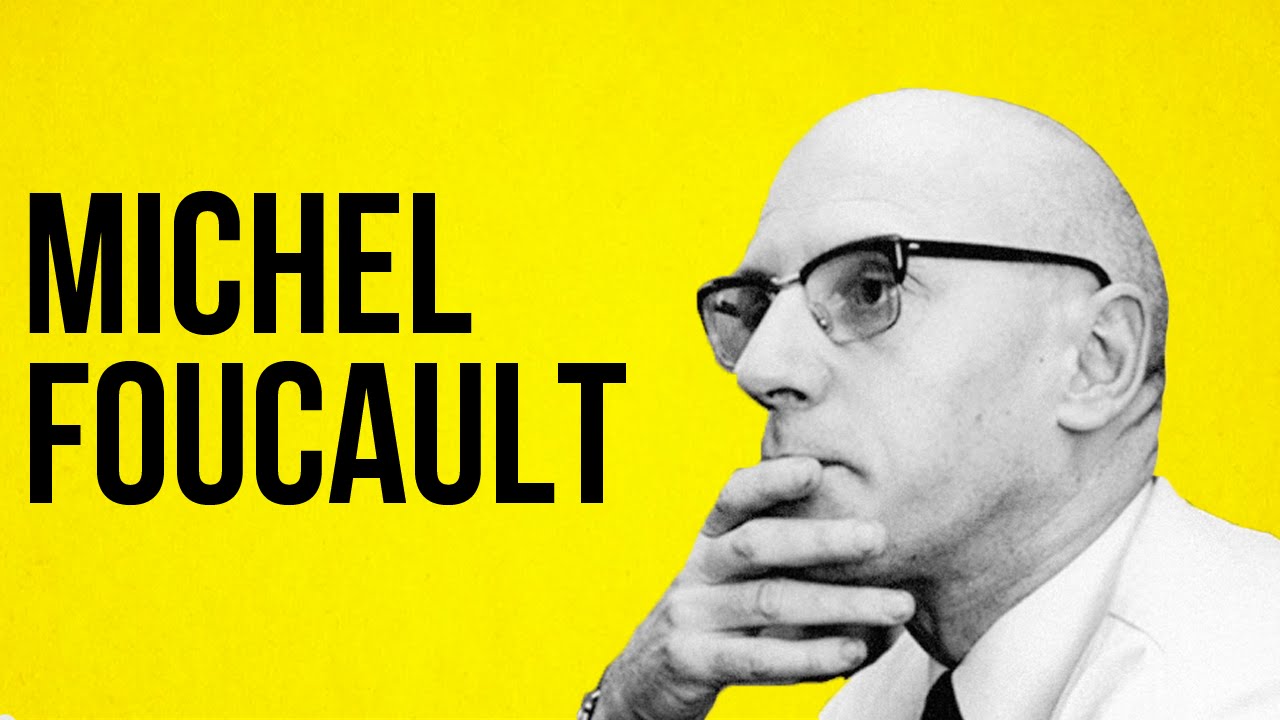
Michel Foucault, philosopher, critic, theorist, historian and much more
(courtesy: i.ytimg.com)
The Panopticon does pose a good option for reforming inmates, addressing large crowds of people, and entertaining. On the other hand, there is a reason why the architecture has shifted from this style despite its effective results. The truth being that it is no longer practical to have structures constructed in this way is what left it as mere history. Nowadays there are too many prisoners incarcerated with far more creative ideas than in the nineteenth century. There are such things as human and civil rights that each prisoner is entitled to, which means they are granted time in "the yard". Even the most dangerous criminals in maximum security prisons are still allowed one hour of recreation out of their cell. During these times interactions with prison guards occur, whom could potentially be corrupt and aid in their escape. My point in mentioning all this, is that despite the genius of the architecture and its once revered use, has now become obsolete. Concert and lecture halls now have televisions and surround sound to mitigate the problems of vision and hearing in such cases.
Traffic cameras are a fine example of the advancement of surveillance ultimately limiting peoples free will and power. Without knowing who is watching, drivers must control their speed and driving habits as not to run through red lights. I personally do not agree with traffic or speeding cameras, due to the fact that it creates a stepping-stone for a society in which all actions are monitored by government agencies and large corporations. I understand the reason for implementing them, traffic accidents have gone down as a result, however, peoples psychological well-being should also be taken into account. A world where everything and everyone is monitored for the excuse of their "well-being" seems to be the plot for any sci-fi movie these days. With so many technological advancements occurring so frequently, I would not be surprised if events like the ones portrayed in the Terminator franchise. As the article stated,
As we naturalize rules, society could be said to become less willing to contest unjust laws.
This is a clear representation of blind faith with minimal questioning from society. So long as it does not affect or impact your life directly, nobody will raise attention. Thousands of people a month receive a ticket in the mail for a traffic violation that last decade would have gone unpunished. The problem does not lie with all drivers, just a small percentage, installing cameras at major traffic intersections and in close proximity of schools suggests all people are guilty of this habit. In other underdeveloped countries, the streets are lawless, with what seems like two as many drivers and motorists on the road yet there are the same if not less accidents. In most underdeveloped areas, there aren't even traffic lights let alone stop signs. There are many factors that contribute to this suggestion, like low horsepower capability yet, people seem to be more vigilant in my opinion.
The craving for more information could potentially lead to mans downfall. Many scenarios have been theorized in hypothetical situations in the form of films. One of these films is Ex Machina, the story of a man who is chosen to interact with a robot capable of artificial intelligence. The man was supposed to run a series of tests on the subject, then determine whether it was capable of passing as a human or not. Ultimately the mans urge to gain more information and sympathy for its confined state, led to his demise. The internet is one of the most impactful inventions to date, with its capability of linking individuals globally whom without it would most likely never interact otherwise.
Pjotr Sapegin's Madama Butterfly was a creative spin of Giacomo Puccini's 1905 opera depicting the tragic reality of temporary marriages forged between naval sailors and the indigenous females. The animation was interesting to say the least. I had not seen the original opera so as soon as the video began I was taken for surprise. With the first few minutes elapsed and the story beginning to unravel, it was clear that there was deep meaning behind the initial scene which ultimately turned out to be a devastating ending. The woman was left behind to bear the sailors child only to have him return and be stripped of the child and emotionally scarred eventually pushed to take her own life. The spirit and innocence the woman once had in her physical form was not lost when she took her own life but was carried into the afterlife when her spirit took form as a butterfly. The butterfly resembles the freedom that she had always wanted or deserved while waiting for her lover, which she can now fully achieve after being given wings. Overall, the animation was well choreographed and extremely thorough, however, took a great degree of interpretation to arrive at the exact significance.