Showing posts with label Tampa. Show all posts

Saturday, April 16, 2016

The Microchip

Image Of A Modern Day Microchip
(Courtesy: thereelnetwork.net)
The link above directs you to PBS.org where readers can learn about the history of the microchip.

The microchip, an invention that has spurred so many others that it can be considered a building block for most future technologies. Most commonly, it serves to be used as a personal computing device. Due to Moore's law, microchip technology is advancing, reaching greater computing power at cheaper costs. Due to this defined law, the average smartphone in 2016 has more computing power than Apollo 11 in 1969 when it ventured to the moon, says Time magazine. As described in a 2012 NASA post, "smartphones have more than 100 times the computing power of the average satellite, with fast processors, high resolution cameras, GPS receivers and several radios and sensors built in". With such vast capabilities and advanced technology, the power to create increases exponentially.

The reality, however, is that the average smartphone owner will not use their phone to develop anything useful, but remain a consumer only to download applications or send text messages. For those who have contributed to the advancement of society with life improving products or services, the world thanks you and hopes to see more inspiring people like yourself.

Stengel, Richard. "Making Sense of Our Wireless World." Time. Time Inc., 27 Aug. 2012. Web. 16 Apr. 2016. 

Yost, Bruce. "This Week @ NASA, November 23, 2012." NASA. National Aeronautics and Space Administration, 23 Nov. 2012. Web. 16 Apr. 2016.

Friday, April 15, 2016

3D Printing Project

Spiny Shell (Courtesy: vignette2.wikia.nocookie.net)
Front View of Spiny Shell (Courtesy: Matthew Chang)
Side Profile of Spiny Shell (Courtesy: Matthew Chang)
Of all the projects assigned throughout the semester, the 3D printing project was the most rewarding. With the guideline specified as a cute weapon, my inspiration came from the spiny shell from the Mario video game series. The spiny shell is represented in the first photo while, the second and third are the 3D printed version. It is not the most detailed replica, but considering it was my first time using a 3D printer, it came out well. I was particularly satisfied with the final project, and surprised at how sharp the spikes turned out to be. The program I used to create the model was Tinkercad. It was very user friendly, with many features, community made objects, as well as detailed tutorials. 

Overall, it took 20 hours to design and finish this project then was sent to the staff at The Hive in downtown Tampa for printing. 3D printing has become much more popular in the last few years as the cost of acquiring a printer has become more affordable. With popularity comes more creative projects like this, new ideas, as well as solutions to specific problems. Having the knowledge to use 3D printing interface and the ability to print items will surely be vital in the near future. If given another opportunity or have free time to create more 3D objects I would gladly take that opportunity.

Tuesday, February 23, 2016

The Pirates of Penzance Video Game Conversion


Above, the cast of The Pirates of Penzance, 1983. Directed by Wilford Leach
(Courtesy: blogspot.com)
As assigned I created a video game based on an opera created before the year 1920. For the video I decided to choose the opera The Pirates of Penzance. The story follows a pirate apprentice, who wishes to rid himself of the pirate life now that he has reached the age of 21, the end of his contractual service. After it is revealed that he was born on a leap year and technically has 5 birthdays, the loyal pirate must find a way to please his crew but also win the love of his life, Mabel. 


In short, my game would fall under the open world category and follow protagonist Fredric, as he ventures through Penzance Bay seeking to gain freedom from the life of a pirate. Throughout the campaign gameplay, characters from the opera are featured, side missions are available, and interactions which lead to greater character development are present. 
The following images are a few screenshots of my paper. Overall, the film adaptation was difficult to watch, but the project was thought provoking as it allowed for unlimited creativity.


Thursday, February 18, 2016

Paper Airplanes & Flight

(Courtesy: Matt Chang)
Tuesday's class involving paper airplanes was a great learning experience. It bridged the gap between 2D material and 3D models. It was curiosity that lead man to reach new heights and discover flight. Pioneers in China around 400 B.C., discovered the earliest form of flight with the invention of the kite (Shaw, 2014). Since this event, many other innovators and inventors went on to create their own flying mechanisms bringing them closer to the modern invention of the airbus. Most notably are Leonardo da Vinci, The Wright Brothers, and Alberto Santos-Dumont (JACO, 2016).

Before class it was each student's responsibility to act as innovators and inventors, using previous paper airplane designs to craft our very own models. There were no restrictions to what a student could craft, leaving creativity as well as imagination unhindered. Personally, it was a far greater outcome without the existence of guidelines or a criterium. As for my model, I searched many sources which had claimed to feature the best design, however, I ended up testing the few that I thought to be promising but reverted to a model that had worked for me in the past. Many of the other  models caught my attention with colorful and rounded designs.

The competition between the class revealed that some had the most creative, shortest, longest, and most aerodynamic designs. I personally liked moving out to the parking garage giving each student the chance to demonstrate how aerodynamic their paper plane was. During this event, it was Joey and Dozer's airplanes that impressed me the most. Their models had been crafted in a way such that the wind carried them a great distance with little to no resistance. My plane on the other hand did not do so well outside despite winning the longest distance indoors. Overall, this was a powerful activity that brought out creativity and competition amongst myself and the other students.

Shaw, Robert J., Dr. "History of Flight." History of Flight. NASA, 12 June 2014. Web. 15 Feb. 2016

JACO Aerospace. "History of Aviation: Aircrafts Through Time. " www.e-aircraftsupply.com. Jaco Aerospace, n.d. Web. 15 Feb. 2016.

Sunday, January 31, 2016

Coldplay by Mike Tompkins

Mike Tompkins' A Capella cover of Paradise by Coldplay
(Courtesy: www.tedeschi.mx)
The Youtube video by Mike Tompkins performing Paradise by Coldplay in A Capella was astounding. His voice is extremely versatile and is able to prove he can compose a song on his own. I have seen a few songs performed in A Capella, however, this is by far one of the more eye catching and involved out there. The addition of the multiple camera appearances definitely increases the engagement with viewers. With all of the sounds and movements his mouth makes, viewers can watch all of the effort that went into the making of the song.

The art of opera singing has evolved drastically since its creation in 16th century. Nowadays singers must reach and exceed new heights as they expand their talents far beyond just singing. Mike Tompkins displays this well as he demonstrates his skill beatboxing, singing and creatively imitating instruments as seen in his other videos. The singer of today seems to be well versed in a variety of fields, in addition to drawing inspiration from other talented artists. Even today's artists are somewhat of a technological genius. For someone whose main talent is singing, his videographer skills are impressive proving a true blend of technology and art in this modern age.

With the assistance of Youtube, millions of people are able to broadcast their talents and shared skills with the world. This expanded audience opens up many opportunities that they otherwise would not normally have. Many Youtube stars with a million or more followers started just like any other amateur user did when originally creating an account, with a minimal fanbase and a desire to reach thousands of viewers around the world. If opera in the 16th century had the ability to attract such a vast crowd for free, like Youtube has done for vocalists such as Mike Tompkins, then it would have been bigger in other countries than just Europe. Every culture has their own take on performance art and singing, yet all do not stem from opera itself, rather takes influences from each other and their traditional roots.

Overall, the modern day singers have evolved since Italian theatre and moved to an electronic stage than can be viewed by everyone at all times.

Thursday, January 28, 2016

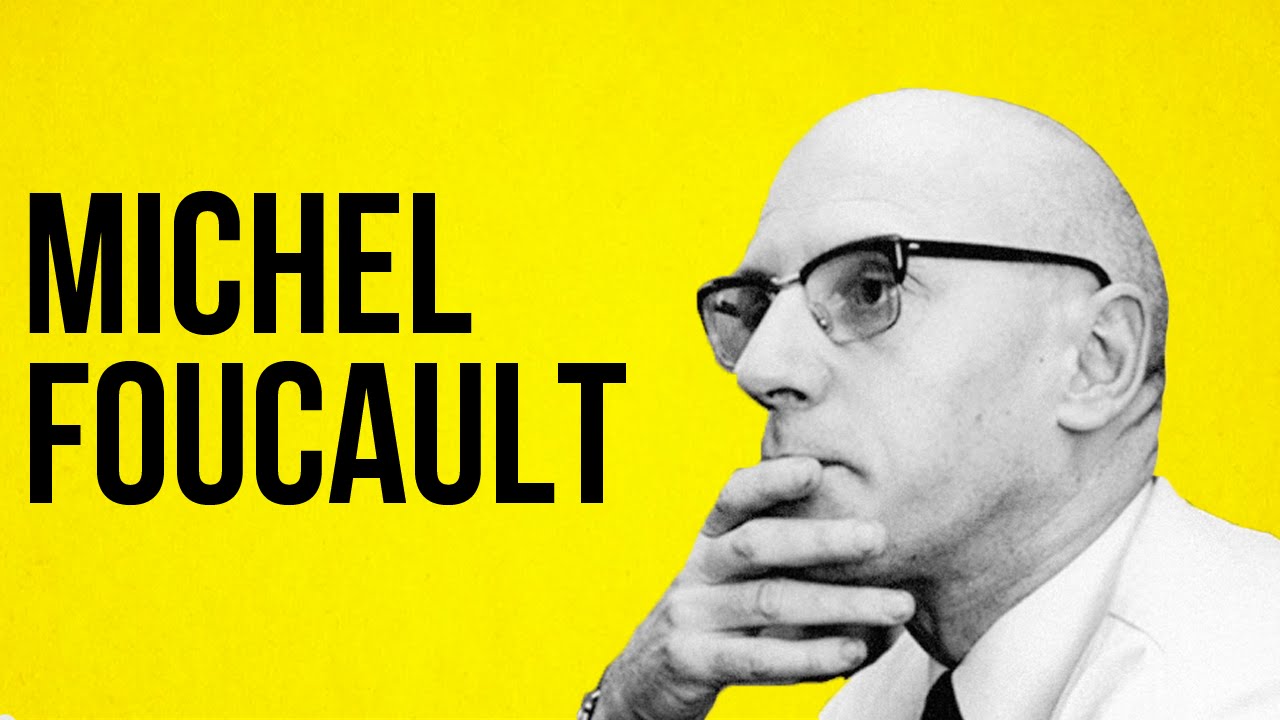
Foucault & The Panoptic Tower

Michel Foucault, philosopher, critic, theorist, historian and much more
(courtesy: i.ytimg.com)

The Panopticon does pose a good option for reforming inmates, addressing large crowds of people, and entertaining. On the other hand, there is a reason why the architecture has shifted from this style despite its effective results. The truth being that it is no longer practical to have structures constructed in this way is what left it as mere history. Nowadays there are too many prisoners incarcerated with far more creative ideas than in the nineteenth century. There are such things as human and civil rights that each prisoner is entitled to, which means they are granted time in "the yard". Even the most dangerous criminals in maximum security prisons are still allowed one hour of recreation out of their cell. During these times interactions with prison guards occur, whom could potentially be corrupt and aid in their escape. My point in mentioning all this, is that despite the genius of the architecture and its once revered use, has now become obsolete. Concert and lecture halls now have televisions and surround sound to mitigate the problems of vision and hearing in such cases.

Traffic cameras are a fine example of the advancement of surveillance ultimately limiting peoples free will and power. Without knowing who is watching, drivers must control their speed and driving habits as not to run through red lights. I personally do not agree with traffic or speeding cameras, due to the fact that it creates a stepping-stone for a society in which all actions are monitored by government agencies and large corporations. I understand the reason for implementing them, traffic accidents have gone down as a result, however, peoples psychological well-being should also be taken into account. A world where everything and everyone is monitored for the excuse of their "well-being" seems to be the plot for any sci-fi movie these days. With so many technological advancements occurring so frequently, I would not be surprised if events like the ones portrayed in the Terminator franchise. As the article stated,
As we naturalize rules, society could be said to become less willing to contest unjust laws.
This is a clear representation of blind faith with minimal questioning from society. So long as it does not affect or impact your life directly, nobody will raise attention. Thousands of people a month receive a ticket in the mail for a traffic violation that last decade would have gone unpunished. The problem does not lie with all drivers, just a small percentage, installing cameras at major traffic intersections and in close proximity of schools suggests all people are guilty of this habit. In other underdeveloped countries, the streets are lawless, with what seems like two as many drivers and motorists on the road yet there are the same if not less accidents. In most underdeveloped areas, there aren't even traffic lights let alone stop signs. There are many factors that contribute to this suggestion, like low horsepower capability yet, people seem to be more vigilant in my opinion.

The craving for more information could potentially lead to mans downfall. Many scenarios have been theorized in hypothetical situations in the form of films. One of these films is Ex Machina, the story of a man who is chosen to interact with a robot capable of artificial intelligence. The man was supposed to run a series of tests on the subject, then determine whether it was capable of passing as a human or not. Ultimately the mans urge to gain more information and sympathy for its confined state, led to his demise. The internet is one of the most impactful inventions to date, with its capability of linking individuals globally whom without it would most likely never interact otherwise.

Wednesday, January 20, 2016

1st Day of ART211 with Cat Thompson

Art & Technology clash, an ongoing topic for discussion
(Courtesy: The University of Iowa)
Hey! I am Matthew Chang. I am an International Business and Management major taking this course as it seemed most concurrent with the advancement of art as opposed to the many others. Art is not one of my strong suits, however, I do favor music and drawing when I have free time. Hopefully there will be time to cover these areas throughout the semester.

My first thoughts before beginning class was that it would follow the same constructs as any other art class I have previously taken. In high school and prior to that, the course would cover topics that were determined by a board of educators that deemed particular content important. More often than not, there would not be room for additional material chosen by students in the lesson plan.

Upon arriving to class and listening to Professor Thompson, I knew this would not be the case. She made it fundamentally clear that what we learn in class would be relevant to our daily lives and the influences it draws upon.  I am particularly excited to see how art has evolved from its most basic form to its most modern representation.

After concluding our first meeting, I left with a great sense of relief knowing that the class is instructed by a professor with an unconventional way of teaching. This creative approach will surely breach the gap that many other professors have a difficult time overcoming with their students.

The story of Dr. Cuero is a fine addition to the classic tales of struggling at an early age, striving for greatness and eventually achieving it. With 9 scientific inventions claimed in his name, it is no wonder why he is considered a revered microbiologist. His invention of a product that helps clean up oil after spills and discovery of a process, stimulating anti-oxidant production in plants are extremely helpful to many businesses as well as applicable towards an environmental effort. I agree with Dr. Cuero, in that to be creative you need to exceed preconceived notions of you by innovating and changing expectations. Many born into luxury are at a disadvantage as they are not challenged to find solutions to life's most basic obstacles, leaving them with only the most challenging which are left incomplete or unsolved. Learning inductively, new knowledge, is imperative for growth in addition to advancement of our society. His interview with Patricia Ross made it clear that many obstacles can be overcome as long as the individual sets realistic goals without the fear of failing and interacts with their surroundings creating new ways of thinking.

So far it seems to be a good start to the spring semester, I am looking forward to the next class.