This blog is an updated equivalent to a journal where records, pictures and comments on my assignments are to be shared with my peers, professor, and the world.
I love the idea behind this art instillation. Having the installation present without a projection alone astonishing, however, once the projector overlays video, it becomes an entirely new piece. This is by far one of the most creative uses of projection I have seen. What is great is that the images and installation are 2D yet when the projections play through, the installations have great depth and the illusion of 3 dimensions. Haunted houses and amusement parks should feature most visuals like this as it draws onlookers attention away from reality. Each little set made for this installation features its own background story that can be viewed and interpreted in various ways. I believe that for an art piece this is most important. The audiences perception of the piece should always be a consideration that the artist makes. It is great that the traditional art is given new life with the projector. Overall, I am really impressed with this installation and how it seems like a contemporary take on Wayang Kulit.
Yoko Ono's 1965 cut piece was a great example of performance art. She subjected herself to the will of the public. It was a bold choice to let the audience interact with her as a live art installation. Much more credit is given to her for letting the audience cut off her clothes. I don't fully understand the message or original intent behind this performance art, however, I know it provides deep meaning into the life and beliefs of Yoko Ono. Being as prominent of a social figure as she is, this performance art is one to be admired for bravery and impact. The music that accompanies the video is certainly strange enough to make listeners reevaluate what they are watching solely based on the eclectic sounds made throughout the track. It is worth noting that throughout the entire video she maintains a calm and soothing look, rarely phased by the audiences interactions. Overall, I enjoyed Yoko Ono's cut piece, although it is not an approach at performance art I would take myself.
The performance piece in which Banksy modifies and recreates Paris Hilton's new CD is amazing. I was unaware he even did this, despite knowing about his work for years now. I must applaud Banksy as I share a strong dislike for Paris Hilton along with the rest of the world for having little to no talent. I enjoyed the idea and concept behind this event, however, the quality could have been better. I believe the way in which the CD's were switched out could have been easier. Assuming that this video was taken years ago, I will not critique this video as harshly as I would a modern day reproduction. This was most certainly shot during the age where hard copy disks were as heavily guarded and monitored than jewelry. Nowadays CD's have been rendered obsolete with the popularity of streaming and now store owners would be lucky if thieves stole their hardcopy disks just to free up the space they are taking up. Overall, I enjoyed the performance and hope to see Banksy recreate this old video with a newer more relevant artist.
The link above directs to Wired.com where readers can learn more about the 1984 Blue Busters ad released by Apple.
Apple's original corporate philosophy was nonconformist and untraditional to the standard set at the time by IBM. This commercial had sent the message to viewers that the new Apple computer would rid away with the suit and tie IBM salesmen promoting their generic computers. What was especially great about this commercial was that it was sung by Ray Parker, Jr., the same guy who voiced the original ghostbusters theme song. At the time ghostbusters was such a hit that anything associated with the film was almost guaranteed to be successful. Watching both the Ghostbusters and this Blue Busters ad, there are plenty of similarities that viewers can pick up on, bringing authenticity to the commercial. Years later, this commercial is just as nostalgic as it was when it was first released. It is truly a blend of both art and technology.
Youtube Clip from "How to Succeed in Business Without Really Trying" by Rob Ashford
(Courtesy: CountessKarma)
This blog post is a response to the post made by Ángel at http://angel-stagedoor.blogspot.com.
The cast of "How to Succeed in Business Without Really Trying" performs 'Brotherhood of Men' at the 85th Annual Macy's Thanksgiving Day Parade. After watching this clip, I was rather shocked to see Daniel Radcliffe take the lead role for a musical. I am not particularly a fan of Daniel Radcliffe, but this performance was well done and was a great showcase for the Frank Loesser adaptation. Despite being known for his role as Harry Potter in the Harry Potter movie series, he does a good job taking on the role of J Pierrepont Finch. He definitely has talent after working his way into the hearts of audiences with eight movies, and does a fair job with this performance. As adored as he is with fans, his singing needs improvement. As this is his first major musical, I am sure he will fine tune his voice for future performances. Aside from the criticism I believe this is a great opportunity for Radcliffe to put his hidden talents on display.
Having only seen a few Broadway musicals in my lifetime, I am not as qualified as others to fully critique the clip. The last show I saw was Larry David's "A Fish In The Dark" this past summer. What made it enjoyable was the cast, the underlying humor, and well developed plot. It was a show that I have recommended to others before and will continue to do so as I enjoyed it. So long as Ashford's new adaptation of the 1961 musical can meet similar standard, I am sure it can do well. Overall, I wish Radcliffe, Ashford and the rest of the "How to Succeed in Business Without Really Trying" crew the best and hope they can exceed critics expectations.
After watching the video shown above, it is fascinating to see how Broadway has evolved from vaudeville, burlesque, and cabaret. I was particularly impressed with the woman who could pick up a chair with her teeth and swing it around effortlessly. This is impressive by today's standards, as many people would usually break their teeth or be sent to the dentist expecting a hefty bill. It certainly holds weight against some acts seen on the television show America's Got Talent. This burlesque dancer could have made quite a living if she were born in the 21st century. Surprisingly, I enjoyed the footage and the various acts despite being from 1898 to 1910. The acrobat in particular is worth noting. She was able to fully exercise her talent and skill without any limitations or safety nets, making her performance exquisite and enthralling. Nowadays almost every professional performance artist has a manager who advises against many of the death-defying acts for the purposes of safety. In many cases, some acts do not get clearance and force the performer to limit their routine. This puts a damper on many performers who do not get a chance to fully express themselves. This as opposed to freelance exhibitionists, who seem to hold a reputation for doing whatever they feel inspired by and can pull off to draw a crowd, make headlines, or leave a lasting message. Broadway is now reserved for large feature productions yet has deeply ingrained roots within vaudeville, burlesque, and cabaret. It is difficult to recognize a Broadway show for its brilliance without paying homage to the three performance styles that it has stemmed from. Today's Broadway shows are so elaborate and feature performance art, digital imaging, and an ensemble. Talent is just as good as it was as the art form developed over the years.
Wayang Kulit, the Indonesian theatrical performance of shadow puppets, is deeply ingrained in the country's culture, history, and livelihood. It is so important that there are three specific regions where it has become infamous for this art form. Careers, theaters, and pass times have been created as a result of this cultural performance. Wayang Kulit can be used to describe the current social structure of Indonesia, give out sermons, and a medium of education as mentioned in the video. It can also be used as a medium for dispersing information to the people. It is seen as an ingenious cultural heritage of Indonesia and the world to many Indonesians, often synonymous with the identity of the country.
In the video a man who now works as a Dalang, a shadow puppeteer, was taught since the age of three to master Wayang Kulit. As a Dalang he is expected to orchestrate the puppet movements in synchronization with the music and dialogue, as well as play instruments at the same time. According to the video, a single performance can use up to 400 different Wayangs, each with their own characteristics and distinct features that contribute to the storyline.
Much like Wayang Kulit, American theater has shared its history with storytelling and performances. Puppet shows, marionettes, and films have been used to achieve many similar goals that the Indonesians seek with Wayang Kulit. Despite the low technological integration that the Indonesian theatrical performance has, it still requires a great amount of skill and has remained true to its origins. American theater unless specified as solely one type of show has evolved to a more contemporary style. This change has developed in order to satisfy the ever-changing interests of the American public. Adaptations from classic performances have now become common and most of the old styles are performed for a sense of nostalgia or urge for avant-garde trends.
Steamboat Willie, the first fully synchronized sound cartoon by Walt Disney, is a classic animation that spans many generations. Being known for its iconic characters Mickey and Minnie Mouse, this cartoon had everything I personally like in a film. The storyline was well developed, attention to detail was present, the character appeal in the protagonist, and humor. In the video posted above, a short clip of Steamboat Willie can be seen. The video opens with the Steamboat, which is given movements to certain non-mechanical components as if it were alive. The smoke stacks, steamboat whistle and crane hook are given lifelike characteristics. Right away it is established that conventionally inanimate objects can possess conscious actions. This is seen in many other cartoons as well, yet is worth noting since the supporting animations contribute to the overall persona of Mickey Mouse, one of the most recognized characters in all of the world. He is so iconic that he is the first cartoon character to ever star on the Hollywood Walk of Fame. As the clip continues, the innocence of Mickey Mouse can immediately be seen as the over joyous steamboat worker is going about his day at work. This can be seen throughout Mickey's career and lends reason to why is he so beloved. With only 7 minutes and 22 seconds in this clip, this animation features so many movements and details that help build the storyline. After having completed my own 200 page hand drawn flip book animation, I can only imagine how long it took to finish such a storyboard. Walt Disney and his animators were extremely creative with this tale of Steamboat Willie, which years after being considered an adult still find this cartoon appealing to my inner kid. It brings about happiness, childhood memories, and an adolescent innocence that not many cartoons have. Having created an animation for this class myself, can say almost anyone even the untalented can create an animation, but creating one that captures the viewer's attention such as this is difficult.
The photo above is a grid project that was made with bottle caps. In total the number of bottle caps used to make this piece is 63. The bottle caps come from 14 different drinks. These bottle caps are just a few of the many I have collected with the intention of using for a future project. Each one is significant of a memory that has occurred over the past 3 years, both good and bad. Personally, I enjoy the idea of this project. Using unconventional items to create a grid pattern had sparked creativity amongst the class. It was impressive to see what other students had come up with, in particular, there were projects made from baked goods. Other designs featured candy, Post-it notes, and Solo cups. Of all of the various drinks represented above, my favorite was Cusqueña, a Peruvian beer with the bottle shown in the top right corner. The image shown on the bottle cap is of Machu Picchu, the Incan citadel set high in the Andes Mountains in Peru. Although it is rare to find at most establishments, it can still be found in America. To many who have had the pleasure of having this drink, it is a comfort that can be enjoyed in North America not only South America.
Video Of Dmitry Morozov's Vtol Project
(Courtesy: vtol.cc)
For my art in the news presentation I chose Dmitry
Morozov's Vtol project. Morozov is a Russian media-artist, musician
and engineer of strange-sounding mechanisms. His Silk installation,
in particular, was the focus of my presentation as it was related to music,
technology, and art. This piece is unique in that it autonomously makes music
using realtime fluctuations in litecoins and bitcoins connected to an Arduino
platform, sound systems, servo motors, guitar rails and a tuning mechanism. The
sounds vary depending on the unfalsifiability, immateriality, decentralization
and transparency of values.
"This piece explores how new technologies and
progress in such areas of knowledge as cryptography, mathematics, computer
science influence the financial system, inevitably changing the social
structure of the society", says Morozov.
The Silk installation was inspired by the
decentralization of existing currencies and the formation of a new unit of
exchange independent from political and geographical limitations. Currently the
piece is in Moscow and with each passing day change from the previous as does
the data it is responding to. Personally, I have not seen anything like this
before and was interested in sharing it because of how many discussions I have
had involving bitcoin over the past 4 years. It would be interesting to see how
the piece would react if the data were to reach the furthest extremes, worth
nothing and highly valued.
Below are pictures of the installation courtesy of Morozov's website:
Above is a depiction of what a Minstrel show performer would generally look like
(Courtesy: sideshowworld.com)
Today in class we watched Blacks on Vaudeville, a documentary on Vaudeville displaying its history and its correlation with minstrel shows. Minstrel shows, the poorly reenacted representation of how Black Americans, slaves, or "Negroes" entertained themselves during this time period. Beginning in 1843 and lasting till the mid-20th century, minstrel shows featuring musical and dance performances for crowds all over America (Minstrel Show, 2016).
Personally, I do not care for Vaudeville or minstrel shows either. As part of history I recognize minstrel shows as a point in Vaudeville's evolution, however, I cannot sit through a viewing without utter dismay. The shows reflect a point in time in which discrimination was very commended, with the specific goal of dehumanizing the Black American people.
The documentary highlighted the shows and its rising popularity in the 1840's. Before watching this segment, I had no idea that there were actually Black American minstrel performers. I always had the impression that it was a Caucasian person with black face, generating stereotypical propaganda to an all Caucasian crowd. To my surprise, I was wrong. Apparently the minstrel shows, featured some willing Black American participants, attendees and supporters. Understandably, for Black Americans at the time the wage was probably better than most paid positions, treatment was bearable, as well as the chance to perform on stage was rare. Some of these performers even used their talent, skills, and resistance to stereotyping to gain popularity amongst their community. As mentioned in the documentary, the Nicholas brothers are revered for doing just that.
The first minstrel performer to receive national recognition and have their performance considered that of a human was Bert Williams. In the documentary a frame shot is paused, displaying a quote by George Washington Carver, best known for developing a variety of uses for crops such as peanuts, then leading numerous speaking engagements as a symbol of African-American achievement (McMurry, 1991). The quote reads, "Bert Williams has done more for the race than I have. He's smiled his way into people's hearts" (Crazybluezzdaddy, 2012). As of 1910 he was the most respected comedians on the American stage and was the first Black American to be admired by people of all races. Overall, there is a collection of good stories of Black American performers leaving their impact on Vaudeville's history, however, those that were not featured are to be even more considered. With its racist and stereotypical motif, it is no wonder why minstrel shows began to disappear just as the civil rights movement started.
Below is a portion of the documentary by PBS, originally aired on November 26, 1997.
"minstrel show". Encyclopedia Britannica.Encyclopedia Britanncia Online. Encyclopedia Britannica Inc., 2016. Web. 24 Feb. 2016
McMurry, Linda O. "George Washington Carver." History.com. A&E Television Networks, 1991. Web. 24 Feb. 2016.
Crazybluezzdaddy. "Blacks and Vaudeville: PBS Documentary." YouTube. YouTube, 29 May 2012. Web. 24 Feb. 2016.
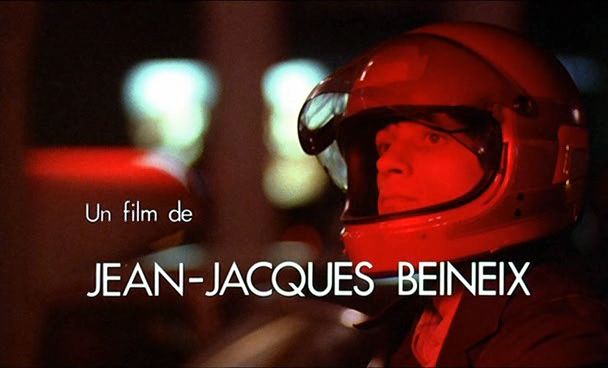
Screenshot from Diva, directed by Jean-Jacques Beineix
(Courtesy: www.servimg.com)
The movie Diva by director Jean-Jacques Beineix, was a mystery and a crime film that told the story of a mail carrier obsessed with an opera singer's voice. His obsession turned into a nightmare when one of his recordings of her becomes mistaken for a cassette that would incriminate the police chief on criminal charges.
I found the movie to be a little cheesy as the characters were doing things that seemed unrealistic or unnecessary. The scene where Nadia gets killed off in public seemed unrealistic as not many people reacted to it despite being in broad daylight, and in front of witnesses, two of whom were detectives.
Another scene that seemed unrealistic was when the detective was chasing Jules by car than on foot. Despite being a "track star" it is highly unlikely that the detective would've been able to keep up with Jules on his moped.
Despite these details, I thought that the movie was decent for a movie produced at its time. Preferably I would have liked more action or a more in depth story following the protagonist. The character of Gorodish was perhaps the best of all of them for his ominous background and witty thinking.
The recording device portrayed in the film was sophisticated technology at the time and was used to capture as well as feature the art of opera. The opera singer Cynthia Hawkins was reluctant to have her voice recorded, however, after the threat of bootlegging and meeting Jules, her stance changed to accommodate it. It was also the fact that she was in her 30's and her voice would not always be as it once swayed the change in decision. At the end it can be seen that the once stubborn "diva", embraced innovation and that her legacy would live on far past her existence without being tainted.
In the film it can be seen that the characters often use pay phones and radio transistors, now with mobile phones being so popular these products are now less commonly used. Overall, I saw a variety of uses for technology at the time and how it impacted many of the characters' decisions much like how our decisions are also influenced by modern technology.
Yolandi & Ninja with their co-star Chappie
(Courtesy: 41.media.tumblr.com)
Tuesday's class was profound watching Die Antwoord's Rich Bitch. The music video portrayed a very particular taste in hip hop that only a few can appreciate. Much so, the lyrics and theatrics are unique to their character and background. In my opinion, the music video was of satire as to prove to the upper class that you do not need to follow rules or act in a respectful manner to have money. Based upon watching their other music videos, it is apparent that there are a number of sub-meanings behind the content they provide for viewers.
Ninja and Yolandi are two ostentatious South African rappers who are better known for their social stigma defying lyrics and vocal careers as Die Antwoord. My first exposure to the duo was in Neill Blomkamp's film Chappie. The two vocalists turn stars as they appear as the supporting roles and parents of the protagonist robot Chappie. They do a fine job portraying South African criminals who must teach a state-of-the-art, armor-plated attack robot with newly acquired AI how to adapt and thrive in a society riddled with crime. Personally, this was one of the best sci-fi films I have watched in a while with plenty of action, comical moments, and dramatic twists. I highly recommend seeing this movie for those who have not already seen it.
Only after learning who they actually were, did the music video and personalities of both vocalists make their appearance in the film that much better. It would be amazing to see a sequel to the Chappie film as it would mean the return of Ninja and Yolandi to the big screen. Overall, the two have made a significant rise in their careers since their formation in 2008. On their individual Instagram accounts they are seen hanging out with Cara Delevingne, the upcoming star to portray Harley Quinn in the Suicide Squad. Previous to this, Die Antwoord had cameos of her and many other renowned stars in their Ugly Boy music video.
Art & Technology clash, an ongoing topic for discussion
(Courtesy: The University of Iowa)
Hey! I am Matthew Chang. I am an International Business and Management major taking this course as it seemed most concurrent with the advancement of art as opposed to the many others. Art is not one of my strong suits, however, I do favor music and drawing when I have free time. Hopefully there will be time to cover these areas throughout the semester.
My first thoughts before beginning class was that it would follow the same constructs as any other art class I have previously taken. In high school and prior to that, the course would cover topics that were determined by a board of educators that deemed particular content important. More often than not, there would not be room for additional material chosen by students in the lesson plan.
Upon arriving to class and listening to Professor Thompson, I knew this would not be the case. She made it fundamentally clear that what we learn in class would be relevant to our daily lives and the influences it draws upon. I am particularly excited to see how art has evolved from its most basic form to its most modern representation.
After concluding our first meeting, I left with a great sense of relief knowing that the class is instructed by a professor with an unconventional way of teaching. This creative approach will surely breach the gap that many other professors have a difficult time overcoming with their students.
The story of Dr. Cuero is a fine addition to the classic tales of struggling at an early age, striving for greatness and eventually achieving it. With 9 scientific inventions claimed in his name, it is no wonder why he is considered a revered microbiologist. His invention of a product that helps clean up oil after spills and discovery of a process, stimulating anti-oxidant production in plants are extremely helpful to many businesses as well as applicable towards an environmental effort. I agree with Dr. Cuero, in that to be creative you need to exceed preconceived notions of you by innovating and changing expectations. Many born into luxury are at a disadvantage as they are not challenged to find solutions to life's most basic obstacles, leaving them with only the most challenging which are left incomplete or unsolved. Learning inductively, new knowledge, is imperative for growth in addition to advancement of our society. His interview with Patricia Ross made it clear that many obstacles can be overcome as long as the individual sets realistic goals without the fear of failing and interacts with their surroundings creating new ways of thinking.
So far it seems to be a good start to the spring semester, I am looking forward to the next class.