Showing posts with label opera. Show all posts

Tuesday, February 23, 2016

The Pirates of Penzance Video Game Conversion


Above, the cast of The Pirates of Penzance, 1983. Directed by Wilford Leach
(Courtesy: blogspot.com)
As assigned I created a video game based on an opera created before the year 1920. For the video I decided to choose the opera The Pirates of Penzance. The story follows a pirate apprentice, who wishes to rid himself of the pirate life now that he has reached the age of 21, the end of his contractual service. After it is revealed that he was born on a leap year and technically has 5 birthdays, the loyal pirate must find a way to please his crew but also win the love of his life, Mabel. 


In short, my game would fall under the open world category and follow protagonist Fredric, as he ventures through Penzance Bay seeking to gain freedom from the life of a pirate. Throughout the campaign gameplay, characters from the opera are featured, side missions are available, and interactions which lead to greater character development are present. 
The following images are a few screenshots of my paper. Overall, the film adaptation was difficult to watch, but the project was thought provoking as it allowed for unlimited creativity.


Friday, February 5, 2016

Review of Jean-Jacques Beineix's Film: Diva

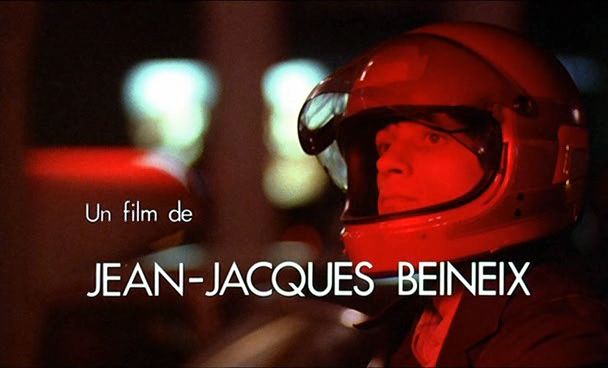
Screenshot from Diva, directed by Jean-Jacques Beineix
(Courtesy: www.servimg.com)
The movie Diva by director Jean-Jacques Beineix, was a mystery and a crime film that told the story of a mail carrier obsessed with an opera singer's voice. His obsession turned into a nightmare when one of his recordings of her becomes mistaken for a cassette that would incriminate the police chief on criminal charges.

I found the movie to be a little cheesy as the characters were doing things that seemed unrealistic or unnecessary. The scene where Nadia gets killed off in public seemed unrealistic as not many people reacted to it despite being in broad daylight, and in front of witnesses, two of whom were detectives.
Another scene that seemed unrealistic was when the detective was chasing Jules by car than on foot. Despite being a "track star" it is highly unlikely that the detective would've been able to keep up with Jules on his moped.

Despite these details, I thought that the movie was decent for a movie produced at its time. Preferably I would have liked more action or a more in depth story following the protagonist. The character of Gorodish was perhaps the best of all of them for his ominous background and witty thinking.

The recording device portrayed in the film was sophisticated technology at the time and was used to capture as well as feature the art of opera. The opera singer Cynthia Hawkins was reluctant to have her voice recorded, however, after the threat of bootlegging and meeting Jules, her stance changed to accommodate it. It was also the fact that she was in her 30's and her voice would not always be as it once swayed the change in decision. At the end it can be seen that the once stubborn "diva", embraced innovation and that her legacy would live on far past her existence without being tainted.

In the film it can be seen that the characters often use pay phones and radio transistors, now with mobile phones being so popular these products are now less commonly used. Overall, I saw a variety of uses for technology at the time and how it impacted many of the characters' decisions much like how our decisions are also influenced by modern technology.

Sunday, January 31, 2016

Coldplay by Mike Tompkins

Mike Tompkins' A Capella cover of Paradise by Coldplay
(Courtesy: www.tedeschi.mx)
The Youtube video by Mike Tompkins performing Paradise by Coldplay in A Capella was astounding. His voice is extremely versatile and is able to prove he can compose a song on his own. I have seen a few songs performed in A Capella, however, this is by far one of the more eye catching and involved out there. The addition of the multiple camera appearances definitely increases the engagement with viewers. With all of the sounds and movements his mouth makes, viewers can watch all of the effort that went into the making of the song.

The art of opera singing has evolved drastically since its creation in 16th century. Nowadays singers must reach and exceed new heights as they expand their talents far beyond just singing. Mike Tompkins displays this well as he demonstrates his skill beatboxing, singing and creatively imitating instruments as seen in his other videos. The singer of today seems to be well versed in a variety of fields, in addition to drawing inspiration from other talented artists. Even today's artists are somewhat of a technological genius. For someone whose main talent is singing, his videographer skills are impressive proving a true blend of technology and art in this modern age.

With the assistance of Youtube, millions of people are able to broadcast their talents and shared skills with the world. This expanded audience opens up many opportunities that they otherwise would not normally have. Many Youtube stars with a million or more followers started just like any other amateur user did when originally creating an account, with a minimal fanbase and a desire to reach thousands of viewers around the world. If opera in the 16th century had the ability to attract such a vast crowd for free, like Youtube has done for vocalists such as Mike Tompkins, then it would have been bigger in other countries than just Europe. Every culture has their own take on performance art and singing, yet all do not stem from opera itself, rather takes influences from each other and their traditional roots.

Overall, the modern day singers have evolved since Italian theatre and moved to an electronic stage than can be viewed by everyone at all times.

Tuesday, January 26, 2016

Pjotr Sapegin’s Madama Butterfly

Giacomo Puccini's Madame Butterfly (Courtesy: https://i.ytimg.com)

Pjotr Sapegin's Madama Butterfly was a creative spin of Giacomo Puccini's 1905 opera depicting the tragic reality of temporary marriages forged between naval sailors and the indigenous females. The animation was interesting to say the least. I had not seen the original opera so as soon as the video began I was taken for surprise. With the first few minutes elapsed and the story beginning to unravel, it was clear that there was deep meaning behind the initial scene which ultimately turned out to be a devastating ending. The woman was left behind to bear the sailors child only to have him return and be stripped of the child and emotionally scarred eventually pushed to take her own life. The spirit and innocence the woman once had in her physical form was not lost when she took her own life but was carried into the afterlife when her spirit took form as a butterfly. The butterfly resembles the freedom that she had always wanted or deserved while waiting for her lover, which she can now fully achieve after being given wings. Overall, the animation was well choreographed and extremely thorough, however, took a great degree of interpretation to arrive at the exact significance.