Showing posts with label internet. Show all posts

Saturday, April 16, 2016

The Microchip

Image Of A Modern Day Microchip
(Courtesy: thereelnetwork.net)
The link above directs you to PBS.org where readers can learn about the history of the microchip.

The microchip, an invention that has spurred so many others that it can be considered a building block for most future technologies. Most commonly, it serves to be used as a personal computing device. Due to Moore's law, microchip technology is advancing, reaching greater computing power at cheaper costs. Due to this defined law, the average smartphone in 2016 has more computing power than Apollo 11 in 1969 when it ventured to the moon, says Time magazine. As described in a 2012 NASA post, "smartphones have more than 100 times the computing power of the average satellite, with fast processors, high resolution cameras, GPS receivers and several radios and sensors built in". With such vast capabilities and advanced technology, the power to create increases exponentially.

The reality, however, is that the average smartphone owner will not use their phone to develop anything useful, but remain a consumer only to download applications or send text messages. For those who have contributed to the advancement of society with life improving products or services, the world thanks you and hopes to see more inspiring people like yourself.

Stengel, Richard. "Making Sense of Our Wireless World." Time. Time Inc., 27 Aug. 2012. Web. 16 Apr. 2016. 

Yost, Bruce. "This Week @ NASA, November 23, 2012." NASA. National Aeronautics and Space Administration, 23 Nov. 2012. Web. 16 Apr. 2016.

Friday, April 15, 2016

Grid Art

Bottle Cap Grid Art (Courtesy: Matthew Chang)

The photo above is a grid project that was made with bottle caps. In total the number of bottle caps used to make this piece is 63. The bottle caps come from 14 different drinks. These bottle caps are just a few of the many I have collected with the intention of using for a future project. Each one is significant of a memory that has occurred over the past 3 years, both good and bad.

Personally, I enjoy the idea of this project. Using unconventional items to create a grid pattern had sparked creativity amongst the class. It was impressive to see what other students had come up with, in particular, there were projects made from baked goods. Other designs featured candy, Post-it notes, and Solo cups. 


Of all of the various drinks represented above, my favorite was Cusqueña, a Peruvian beer with the bottle shown in the top right corner. The image shown on the bottle cap is of Machu Picchu, the Incan citadel set high in the Andes Mountains in Peru. Although it is rare to find at most establishments, it can still be found in America. To many who have had the pleasure of having this drink, it is a comfort that can be enjoyed in North America not only South America.


Tuesday, March 29, 2016

Art In The News- March 2016


Video Of Dmitry Morozov's Vtol Project
(Courtesy: vtol.cc)
For my art in the news presentation I chose Dmitry Morozov's Vtol project. Morozov is a Russian media-artist, musician and engineer of strange-sounding mechanisms. His Silk installation, in particular, was the focus of my presentation as it was related to music, technology, and art. This piece is unique in that it autonomously makes music using realtime fluctuations in litecoins and bitcoins connected to an Arduino platform, sound systems, servo motors, guitar rails and a tuning mechanism. The sounds vary depending on the unfalsifiability, immateriality, decentralization and transparency of values.
"This piece explores how new technologies and progress in such areas of knowledge as cryptography, mathematics, computer science influence the financial system, inevitably changing the social structure of the society", says Morozov. 
The Silk installation was inspired by the decentralization of existing currencies and the formation of a new unit of exchange independent from political and geographical limitations. Currently the piece is in Moscow and with each passing day change from the previous as does the data it is responding to. Personally, I have not seen anything like this before and was interested in sharing it because of how many discussions I have had involving bitcoin over the past 4 years. It would be interesting to see how the piece would react if the data were to reach the furthest extremes, worth nothing and highly valued.


Below are pictures of the installation courtesy of Morozov's website:


Tuesday, March 1, 2016

Walter Benjamin's The Work of Art in the Age of Mechanical Reproduction

Walter Benjamin, author, philosopher and cultural critic shown above
(Courtesy: http://image.slidesharecdn.com)
Walter Benjamin's essay, The work of Art in the Age of Mechanical Reproduction brings attention to technological innovation and its impact on art. He uses art forms such as photographic negatives, lithography, and copperplate etching to describe how imitation has become more prevalent over the years. Stemming from mass production, curiosity, greed and self-interest, replication have always existed.

Benjamin argues that in principle, all works of art are able to be replicated. With many objects, structures, paintings or drawings, this is perhaps true, however, there are exceptions to this principle. Many pictures are considered works of art, featuring a specific time or event that transpired. In the example of a volcanic eruption, an event that occurs very rarely, it would be difficult for someone to reproduce a picture that someone took on a specific day, time, angle, lighting, etc.  Even if the imitator managed to meet all the same criteria, there is such a minute statistical chance that someone would be able to get an identical picture. In the sense that someone could digitally scan the picture or use a negative and "replicate" it, is a possibility but is still a challenge to physically recreate.

There are many forms of art, some easier to imitate than others and some not. In my opinion, performance art is not replicable. It can be imitated but not 100% replicated. Stage performers can practice and rehearse their routine as frequently as possible yet will not be able to perform the same time with consistency. Each interaction with other performers, the physical condition of the performer at the time, mood, and attention to detail are all contributing factors that make replication almost impossible. Overall, my take on the matter leaves me to believe that Walter Benjamin is wrong in stating all works of are replicable. There are certain forms of art that are unique in that they are not replicable by the nature of their appearance, circumstances, or properties.

Benjamin, Walter. "The Work of Art in the Age of Mechanical Reproduction." Modern Art and Modernism. Auckland, N.Z.: PhotoForum, 2007. 218-20. Print.

Thursday, January 28, 2016

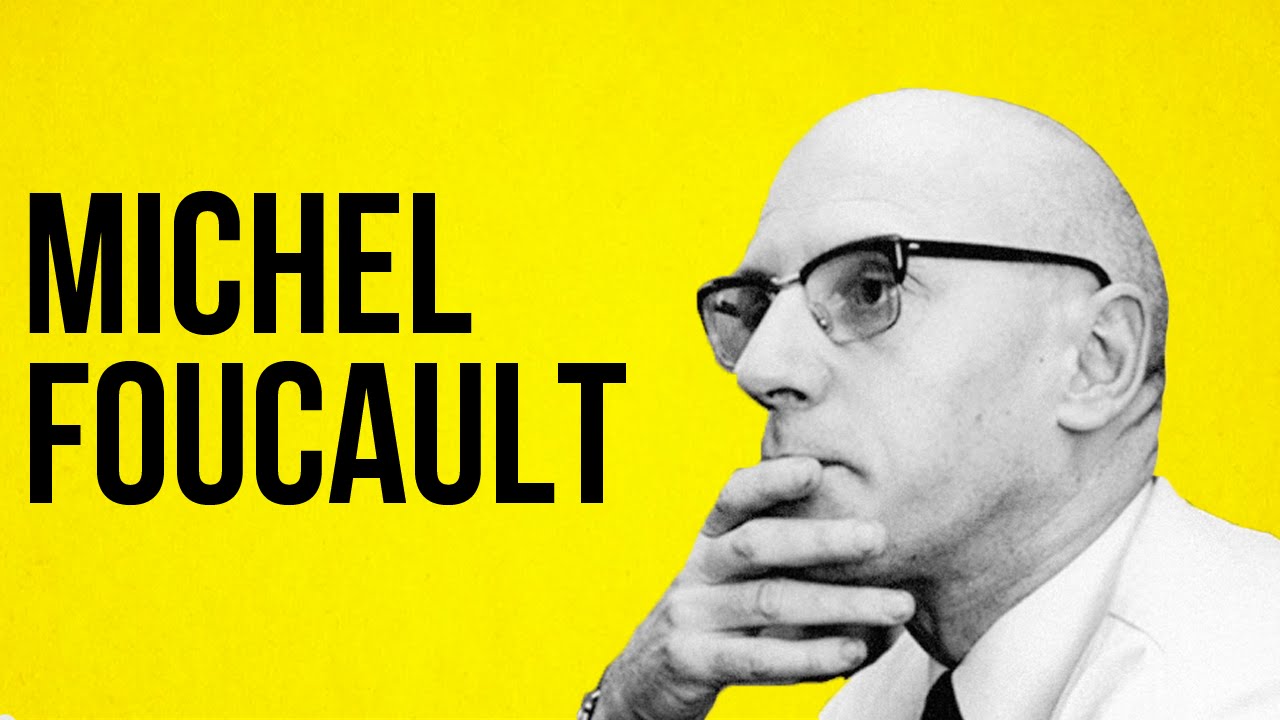
Foucault & The Panoptic Tower

Michel Foucault, philosopher, critic, theorist, historian and much more
(courtesy: i.ytimg.com)

The Panopticon does pose a good option for reforming inmates, addressing large crowds of people, and entertaining. On the other hand, there is a reason why the architecture has shifted from this style despite its effective results. The truth being that it is no longer practical to have structures constructed in this way is what left it as mere history. Nowadays there are too many prisoners incarcerated with far more creative ideas than in the nineteenth century. There are such things as human and civil rights that each prisoner is entitled to, which means they are granted time in "the yard". Even the most dangerous criminals in maximum security prisons are still allowed one hour of recreation out of their cell. During these times interactions with prison guards occur, whom could potentially be corrupt and aid in their escape. My point in mentioning all this, is that despite the genius of the architecture and its once revered use, has now become obsolete. Concert and lecture halls now have televisions and surround sound to mitigate the problems of vision and hearing in such cases.

Traffic cameras are a fine example of the advancement of surveillance ultimately limiting peoples free will and power. Without knowing who is watching, drivers must control their speed and driving habits as not to run through red lights. I personally do not agree with traffic or speeding cameras, due to the fact that it creates a stepping-stone for a society in which all actions are monitored by government agencies and large corporations. I understand the reason for implementing them, traffic accidents have gone down as a result, however, peoples psychological well-being should also be taken into account. A world where everything and everyone is monitored for the excuse of their "well-being" seems to be the plot for any sci-fi movie these days. With so many technological advancements occurring so frequently, I would not be surprised if events like the ones portrayed in the Terminator franchise. As the article stated,
As we naturalize rules, society could be said to become less willing to contest unjust laws.
This is a clear representation of blind faith with minimal questioning from society. So long as it does not affect or impact your life directly, nobody will raise attention. Thousands of people a month receive a ticket in the mail for a traffic violation that last decade would have gone unpunished. The problem does not lie with all drivers, just a small percentage, installing cameras at major traffic intersections and in close proximity of schools suggests all people are guilty of this habit. In other underdeveloped countries, the streets are lawless, with what seems like two as many drivers and motorists on the road yet there are the same if not less accidents. In most underdeveloped areas, there aren't even traffic lights let alone stop signs. There are many factors that contribute to this suggestion, like low horsepower capability yet, people seem to be more vigilant in my opinion.

The craving for more information could potentially lead to mans downfall. Many scenarios have been theorized in hypothetical situations in the form of films. One of these films is Ex Machina, the story of a man who is chosen to interact with a robot capable of artificial intelligence. The man was supposed to run a series of tests on the subject, then determine whether it was capable of passing as a human or not. Ultimately the mans urge to gain more information and sympathy for its confined state, led to his demise. The internet is one of the most impactful inventions to date, with its capability of linking individuals globally whom without it would most likely never interact otherwise.